

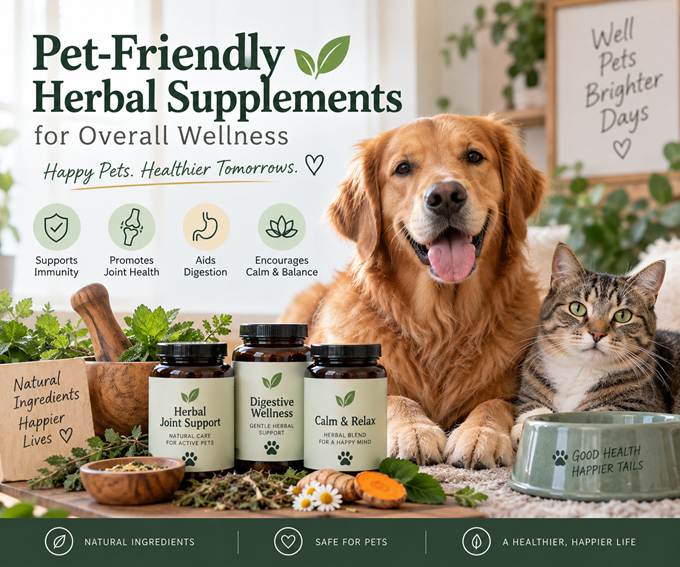
Pet owners are increasingly interested in ways to support their animals beyond basic nutrition, exercise, and routine veterinary care. One area receiving growing attention is herbal supplementation. Certain herbs and plant-derived ingredients have a long history of traditional use and are now found in products formulated specifically for dogs, cats, and other companion animals.
Herbal supplements may be used to support digestion, mobility, skin and coat condition, relaxation, immune function, and general vitality. However, “natural” does not automatically mean safe. Animals metabolize substances differently from humans, and an herb that is commonly consumed by people may be inappropriate or even toxic for a pet.
For this reason, responsible use starts with understanding what herbal supplements can realistically do, choosing products formulated for the intended animal, and discussing supplementation with a veterinarian—particularly when a pet has an existing health condition or takes medication.
What Are Herbal Supplements for Pets?
Herbal supplements are products containing ingredients derived from plants, such as leaves, roots, flowers, seeds, fruits, or plant extracts. Depending on the formulation, they may come as powders, liquids, chews, capsules, tablets, or ingredients in functional treats.
Unlike a complete and balanced pet food, supplements are generally intended to complement an animal's existing diet rather than replace it. Some formulations contain a single herb, while others combine herbs with vitamins, minerals, probiotics, fatty acids, or other ingredients.
People often explore herbal products as part of a broader approach to health and wellness supplements, particularly when looking for additional nutritional support for aging, digestion, stress, mobility, or everyday wellbeing.
The key distinction is that supplements should support appropriate veterinary and nutritional care, not replace diagnosis or treatment.
Why Pet Owners Consider Herbal Supplements
Pets experience many of the same general wellness challenges associated with lifestyle and aging that humans do. An older dog may become less enthusiastic about stairs or long walks. A cat may experience occasional digestive changes. Some animals become unsettled during thunderstorms, travel, grooming, or environmental changes.
Herbal ingredients may appeal because they provide plant-derived compounds with nutritional or physiological effects. However, the usefulness of a particular ingredient depends on factors including the animal species, age, weight, diet, health status, dosage, formulation, and product quality. Rather than asking whether herbal supplements are universally “good” for pets, it is more useful to ask whether a specific ingredient is appropriate for a specific animal and purpose.
Common Herbal Ingredients Used in Pet Wellness Products
Several herbs appear frequently in supplements formulated for companion animals. Their intended applications vary considerably, and evidence supporting their use is stronger for some ingredients than others.
Turmeric
Turmeric is widely recognized for its naturally occurring compound curcumin. It is commonly included in supplements designed to support normal inflammatory responses, mobility, and joint health.
This can make turmeric-containing formulations particularly interesting to owners of senior or highly active dogs.
However, turmeric is not automatically appropriate for every animal. Concentration, formulation, existing medical conditions, and interactions with medications all matter. Giving a pet large quantities of turmeric intended for human consumption is therefore different from using a veterinary-formulated supplement.
Ginger
Ginger has traditionally been associated with digestive support. Pet supplements containing ginger may be marketed for maintaining comfortable digestion or helping animals that experience occasional stomach sensitivity.
Because digestive symptoms can also indicate illness, persistent vomiting, diarrhea, appetite changes, or abdominal discomfort should not simply be managed with an herbal product. These signs deserve veterinary attention.
Milk Thistle
Milk thistle contains a group of compounds collectively known as silymarin and is commonly associated with liver support.
Veterinarians may encounter milk thistle in complementary formulations intended to support normal liver function. However, liver problems can be complex and potentially serious. Owners should not attempt to treat suspected liver disease independently with an herbal supplement.
Chamomile
Chamomile is commonly associated with relaxation and digestive comfort. Some pet-specific products include carefully formulated amounts of chamomile in calming blends.
A calming supplement may be useful as one component of a broader strategy for situations such as travel or environmental changes. Behavioral problems, however, can have medical, environmental, or training-related causes, so supplementation alone may not resolve them.
Valerian
Valerian is another herb sometimes found in calming products for pets. It has traditionally been used for its relaxing properties and may be included in formulations intended for temporary stressful situations.
Because calming herbs can interact with medications or produce unwanted effects, owners should follow veterinary advice and product-specific dosing instructions rather than improvising doses from human products.
Dandelion
Different parts of the dandelion plant have traditionally been used for nutritional and digestive purposes. Dandelion also contains naturally occurring plant compounds and nutrients.
Pet wellness formulations may include dandelion as part of digestive or general wellness blends. As with other herbs, its inclusion in a professionally formulated product does not mean unlimited amounts are appropriate.
Herbal Supplements for Joint and Mobility Support
Mobility becomes particularly important as pets age. Large dogs, highly active animals, and senior pets may experience changes in flexibility or willingness to participate in strenuous activities.
Some herbal mobility supplements contain turmeric, Boswellia, or other botanical ingredients designed to support normal joint function and inflammatory responses. These may also be combined with conventional nutritional ingredients such as glucosamine, chondroitin, or omega-3 fatty acids.
Supplements are only one part of mobility care. Maintaining an appropriate body weight is especially important because excess weight increases the physical load placed on joints. Suitable exercise, comfortable bedding, non-slip flooring, veterinary assessment, and appropriate pain management may all play roles depending on the animal's condition.
If a pet suddenly begins limping, struggles to stand, avoids using a limb, or appears painful, the priority should be veterinary evaluation rather than supplementation.
Supporting Healthy Digestion
A healthy digestive system contributes to nutrient absorption, appetite, stool quality, and overall comfort. Herbal ingredients such as ginger are sometimes included in digestive supplements. Other products may combine botanical ingredients with probiotics, prebiotics, fiber, or digestive enzymes.
Before adding a supplement, owners should consider whether the animal already receives a nutritionally complete diet. Frequently changing foods or adding multiple supplements simultaneously can sometimes make digestive issues more difficult to understand. Recurring diarrhea, vomiting, blood in the stool, significant appetite loss, weight loss, or persistent constipation should always be taken seriously.
Skin and Coat Wellness
A pet's skin and coat can provide visible clues about its general condition. Excessive scratching, hair loss, redness, flaking, or changes in coat quality can occur for many reasons, including parasites, environmental allergies, food sensitivities, infections, and underlying medical conditions. Some pet wellness supplements incorporate plant-derived ingredients intended to support normal skin function. These may be combined with omega fatty acids and other nutrients involved in maintaining the skin barrier and coat.
Herbal supplementation should not be used to mask persistent itching or skin irritation. Identifying the underlying cause is considerably more valuable than repeatedly treating the visible symptom.
Choosing a Pet-Friendly Herbal Supplement
Product selection deserves as much attention as ingredient selection. A professionally packaged product can still vary considerably in quality, concentration, testing, and transparency.
Look for a product that clearly identifies the intended animal species and provides complete ingredient information. The label should state appropriate serving directions and preferably provide ingredient quantities rather than relying entirely on vague proprietary blends.
Manufacturing quality and responsible sourcing are also worth investigating. Companies should be transparent about where products are manufactured and what quality-control processes they use.
Avoid products making dramatic promises such as curing serious diseases, replacing prescription medications, or producing guaranteed results. Supplements are supportive products, not miracle treatments.
When comparing products, consider:
- Whether the product is specifically formulated for the pet's species
- Clearly disclosed ingredients and concentrations
- Appropriate dosing instructions based on weight or veterinary guidance
- Manufacturing and quality-control standards
- Potential medication interactions
- Unnecessary additives or ingredients
- Evidence supporting the intended use
The cheapest or most heavily marketed supplement is not necessarily the most appropriate choice.
Building a Balanced Wellness Routine
Herbal supplementation works best when viewed as one small component of comprehensive pet care. A strong wellness routine starts with species-appropriate nutrition and regular veterinary examinations. Daily activity should suit the animal's age, breed, physical condition, and personality. Mental enrichment through play, training, exploration, and social interaction can also contribute substantially to quality of life. Dental hygiene, grooming, parasite prevention, vaccinations where appropriate, healthy weight management, and access to fresh water are equally important.
Herbal supplements can then be considered when there is a clear purpose and a reasonable expectation of benefit. The goal should not be to give a pet as many supplements as possible. It should be to provide only what is appropriate, useful, and safe.
Conclusion
Pet-friendly herbal supplements can have a place in a thoughtful wellness routine, particularly when they are formulated specifically for animals and selected for a defined purpose. Ingredients such as turmeric, ginger, milk thistle, chamomile, valerian, and other botanicals are commonly found in products intended to support areas such as mobility, digestion, relaxation, and general wellbeing.
However, herbal does not mean risk-free. Species differences, dosage, product quality, medications, and existing medical conditions can all influence whether a particular supplement is suitable. The most responsible approach combines good nutrition, exercise, preventive healthcare, enrichment, and veterinary guidance. When herbal supplements are needed, choose reputable pet-specific formulations, follow appropriate dosing instructions, and monitor the animal carefully. Used thoughtfully, supplements may complement a well-rounded approach to pet wellness, but the foundation will always be attentive everyday care and appropriate veterinary support.